
What I Feed My Active Dachshunds to Help Keep Them Healthy
I’ve been asked these questions lot over the years:
“What dog food do you recommend for Dachshunds?”
“What should I feed my Dachshund to keep them healthy like yours?”
“What do you think about food X or Y for Dachshunds?”
For the most part, I’ve also creatively dodged those questions a lot over the years.
You see, every dog is different. Every owner preference is different. Every budget is different.
There isn’t one right food for every dog.
Also, as we’ve found with the recent Hill’s Pet Nutrition recalls, and the potential grain-free dog food – heart health connection, what we think is good for a while can turn out to be not so great after all.
However, I finally decided it was about time I wrote something about what Summit and Gretel eat though. That way I have a place to point people when they ask in the future.
While I’m still not comfortable recommending specific foods for other dogs, I’ve become more comfortable with the idea of sharing what works best for us and letting you make the decision about what is right for your yours.
Note: Some of the links below are affiliate links, which means that I may earn a small commission, at no extra cost to you, if you make a purchase.
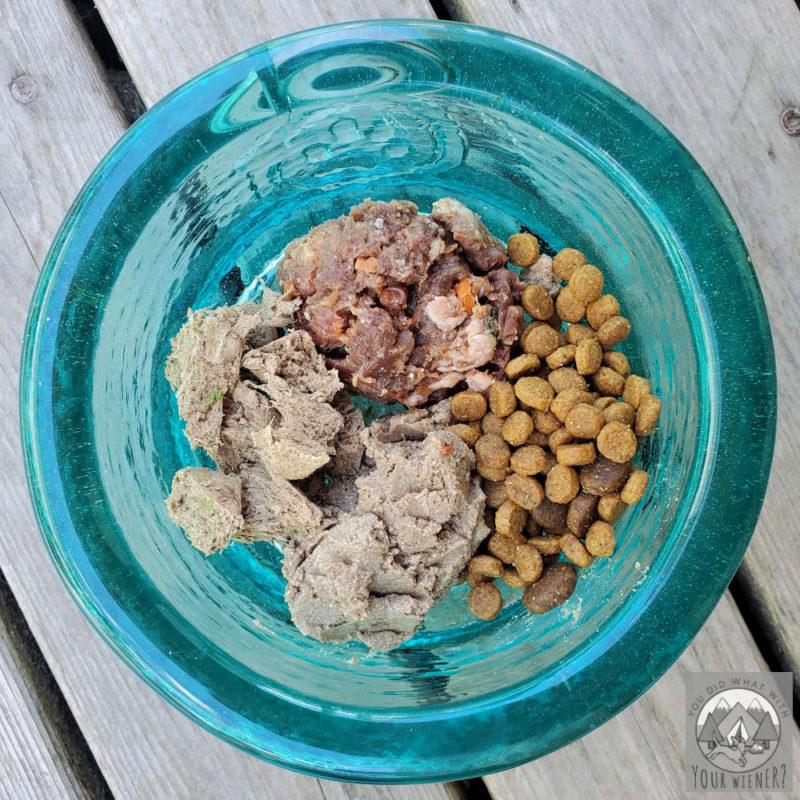
The Dog Foods That I Feed My Healthy Dachshunds
I’ve fed all forms of dog foods over the years – kibble with grain, kibble without grain, canned “wet” food, pre-made frozen raw food, freeze dried raw food.
Today, no matter what the food type, I primarily choose dog foods that are high in protein.
Protein is important for muscle development, which is really important for active dogs.
Note: High protein works for my dogs. It doesn’t work for all dogs so be sure to check with your vet if you suspect your dog.
Summit and Gretel primarily eat raw dog food now but it’s more of a personal choice.
I give them frozen prepared raw because I’m not interested in learning how to create a balanced diet and making my own raw meals at this time.
However, I do sometimes, for a treat and additional nutrient variety, add fun things to their raw dog food to “dress it up”.
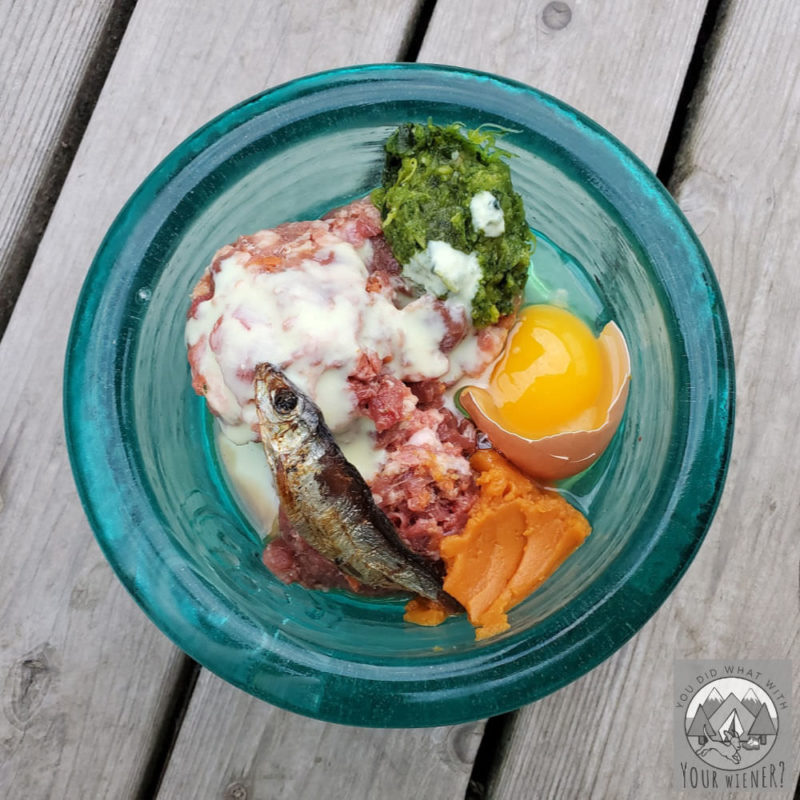
I’m also not a stickler for raw feeding.
I mean, humans don’t eat the same food all of the time. It would make is unhealthy – and, to me, that includes different FORMS of food, not just different brands or sources of protein.
That means, at any given time, Summit and Gretel may be eating a food that is not on this list.
But here are the foods I love and feed the most frequently.
Favorite Frozen Prepared Raw Dog Food for My Dachshunds
Darwin’s Natural Selections™
Darwin’s Natural Selections™ raw dog food is convenient because you can sign up for a subscription and it arrives on your doorstep every 4-6 weeks (your choice) packed in dry ice.
All of their balanced, complete meals – chicken, beef, lamb, turkey, and duck – are made of 75% grass fed or cage-free meat and 25% organic vegetables.
They are also free of gluten, grain, steroids, hormones, and antibiotics.
You can customize your order by choosing the meats you want and the amount of each.
Darwin’s Food can be shipped anywhere in the United States for a $6.50 minimum (shipping costs vary depending on where you are located). If you live in the Seattle or Portland metropolitan areas, you may be in their free home delivery area.
If you’re new to Darwin’s and not sure what or how much to feed you can contact them for a free menu consultation.
Wild Coast Raw
Wild Coast Raw dog food is a “seasonally sourced craft raw food” created with oversight from a veterinarian with 25 years experience.
One of my favorite things about this raw food is that the ingredients are ground but not as small as with most raw foods. You can actually still see chunks of meat in there.
While “flavor” choices can vary by season, their grass-fed beef and free-range turkey meals seem to be available most of the year.
All formulas are made with organic vegetables.
This food is made in Olympia, WA and it appears that it’s only available to purchase in Washington State pet stores.
Steve’s Real Food
Steve’s Real raw dog food is a complete and balanced diet made with grass fed, hormone and antibiotic free meats and poultry.
Steve’s Real Food follows Biologically Appropriate Raw Food (B.A.R.F.) model of 80% Meat/Organ/Bone and 20% Produce.
They source most of the meat and all of the produce from the Northwest.
The meals come in beef, chicken, turkey, turducken, and pork.
You can find Steve’s Real Food at many pet stores around the country.
Nature’s Variety Instinct® Raw
I like Instinct® Raw dog food because it’s high quality and pretty to easy to find in any major city (and some not so major) when we travel.
Their balanced, complete meals are made with 85% real meat and organs and 15% fruits, vegetables and vitamins and minerals.
They use ingredients closest to their natural state like real meat and non-GMO fruits and vegetables.
Their raw meals never include grain, corn, wheat, soy, artificial colors or preservatives.
Meal choices include beef, chicken, and lamb.
You can find Instinct® Raw at many pet stores around the country.
Vital Essentials
Vital Essentials was the first frozen, prepared raw food that I fed Gretel and my previous Dachshund Chester.
Chester was 8 when I made the switch and I saw a huge difference in his energy levels.
That change was likely due to a switch to raw food in general but this Prey Model Raw (PMR) food is unique because it doesn’t contain any fruits or vegetables. Your dog gets all of the nutrients it needs from only meat, organs, and bone.
In the case of Vital Essentials, the ratios are 45% muscle meat, 45% organs and 10% bone content (all from the same protein source).
Vital Essentials raw meat materials are harvested in the U.S.A and they process 100% of our own food in Green Bay, Wisconsin.
Meal choices include beef, chicken, duck, rabbit, and turkey.
It’s available in stores around the US.
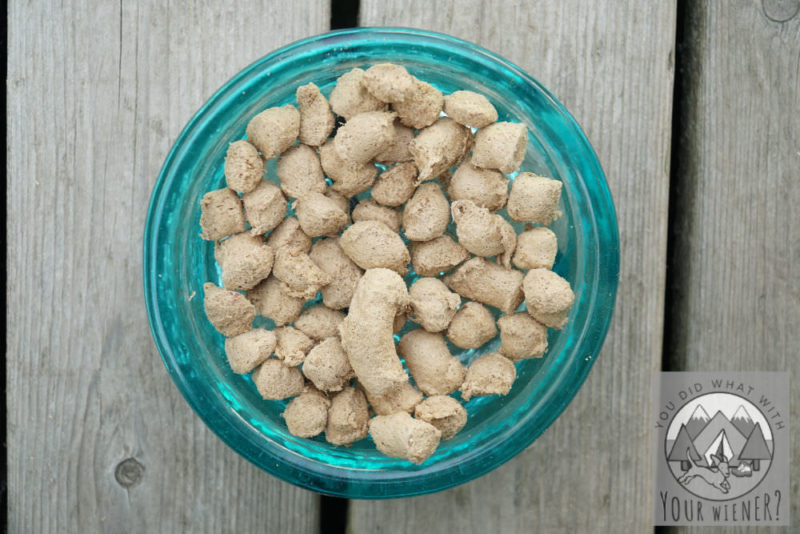
Favorite Freeze Dried Raw Dog Food for my Dachshunds
There is a disagreement over whether freeze dried “raw” dog food is actually raw. It IS processed and some people claim that the drying process can diminish the benefits of fresh, raw meals.
Personally, I believe that the processing and drying doesn’t make a significant difference in the nutrition, specially if you choose those brands that make an effort to maintain as much of the original nutrients as possible during processing.
However, these foods contain significantly less moisture than raw food so it’s very important to re-hydrate them or at least add a good amount of water to the food when feeding.
Small Batch Freeze Dried Sliders
Small Batch is one of my favorite freeze dried dog foods to use because it’s easier to crumble and rehydrate.
Depending on where you buy this food, it’s either made in a facility in California or Oregon. All ingredients are sourced from those states and/or Washington and Colorado.
Small Batch is made with all-natural, certified, humanely raised and harvested meats that are free of hormones and antibiotics. They try to use certified organic meat whenever possible.
Vegetables and herbs used are certified organic, non-GMO, and free of pesticides.
Meal flavors include beef. chicken, turkey, duck, and lamb.
All of their formulas are 88% beef, 10% produce, 2% supplements (except for the lamb which is 78% lamb, 20% produce, 2% supplements)
Small Batch is available in stores around the US and on Amazon.
BIXBI Rawbble
Rawbble freeze dried dog food comes in little nuggets so you can “feed it just like kibble”, although I still sometimes smash the nuggets a little so they soak up more water (or I just add water to the bowl and let them float on top).
Rawbble is USA made and sourced with 98% meat, bones and organs.
It’s free of grains, gluten, animal meal, hormones, antibiotics, fillers, artificial flavorings or colors, and preservatives.
Meal choices include pasture-fed beef, free-range chicken, free-range duck and wild-caught salmon with free-range chicken.
Rawbble is available at many retailers around the US and on Amazon.
Orijen Freeze Dried
Orijen freeze dried dog food is one of my favorites just because I trust the really high quality of Orijen foods.
They claim that their gentle freeze drying process allows their food to “provide all the benefits of a raw diet in a convenient dry form.”
This is a “Whole Prey” raw food made with 80% meat/game/fish ingredients, 10% vegetables/fruits/botanicals, and 0% grain/potato/tapioca/plant protein concentrates.
It contains no grains or gluten.
Orijen freeze dried food comes in their Original, Regional Red, and Tundra formulas.
It’s available at many locations around the US and and on Amazon.
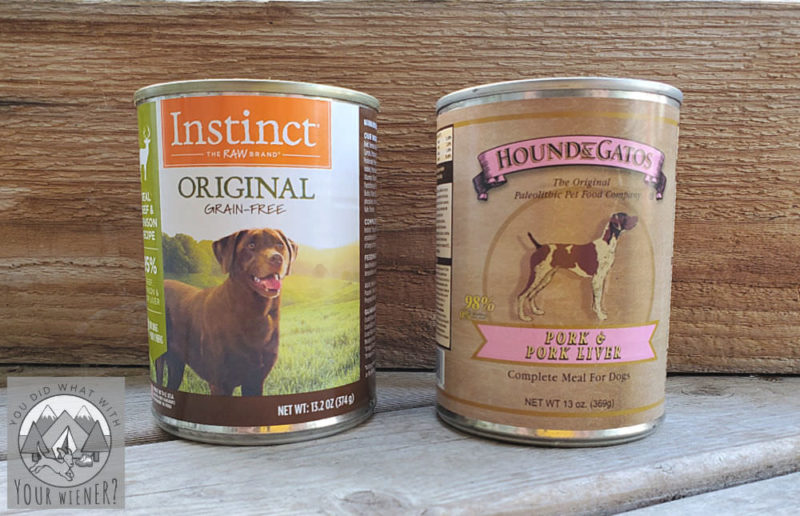
 Favorite Canned Dog Food for My Dachshunds
Have you looked at the canned food options lately? I feel like there are almost more canned options than kibble and there are a bazillion of those.
To keep it simple for myself, I personally prefer pate style foods that are high in protein.
Identity Canned Dog Food
Identity Canned Dog Food stands out to me for a few reasons.
First, it’s one of the few wet dog foods that I’ve found that, in addition to being grain free, contains no potatoes or legumes.
Second, the company is 100% committed to using only the finest quality ingredients.
All of the flavors – grass fed Angus Beef, free-range quail and turkey, free-range prairie pork, free-range NZ lamb, free-range heritage turkey, free-range Cobb Chicken, and free-range Canadian Duck – use responsibly raised/sourced meats that are never frozen before production.
The meats are also 100% free of added hormones and antibiotics and are 100% GMO & BPA free. The food is manufactured in Canada and the company is US family owned.
A moist it’s a moist, limited ingredient pate that can be fed as a complete & balanced meal or as protein-rich topper to kibble or raw dog food.
I order this food from Amazon.
Hound and Gatos
Hound and Gatos came personally recommended to me by a friend who runs a Dachshund rescue in Florida.
It’s made of 100% Animal Protein (no plant protein), contains no fillers or meat by-products, and is manufactured in the USA in USDA-inspected facilities.
It comes in three flavors – Paleolithic Diet, Pork & Pork Liver, Duck.
Hound & Gatos was awarded, “The Most Trusted Pet Foods” by TruthAboutPetFood.com 2014, 2015, 2016, and 2017.” It was also included on the Whole Dog Journal approved canned foods list for 4 years.
It’s a pate style grain free canned food that’s a complete meal for all life stages.
I order this food from Amazon.
Instinct Ultimate Protein
Instinct Ultimate Protein is a grain free pate style canned dog food that’s a complete & balanced nutrition from real ingredients to support your dog’s health from puppy to senior.
The meats used in the food are “responsibly sourced” and the food is at least 95% protein (more for some flavors).
It’s made without grain, potato, corn, wheat, soy, carrageenan, artificial colors or preservatives – ingredients known to trigger food sensitivities.
It comes in two flavors – chicken or beef.
This food is available on Amazon and many pet food stores around the country (including Petsmart).
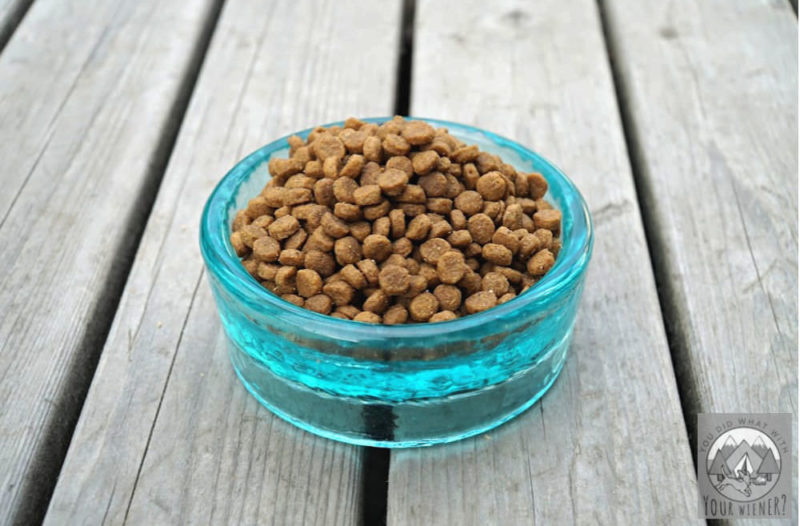
 Favorite Dry Kibble for My Dachshunds
Note: These foods are on the “most commonly reported pet food brands named in DCM (heart condition) reports submitted to the FDA” (although lower on the list). See below for more details and my take on that.
Orijen Dry Dog Food
I’ve been a long-time fan of Orijen “Biologically Appropriate & Grain Free” dry dog food.
I don’t stick with just one of their formulas. However, I choose the Regional Red flavor most often.
They also make Original, Tundra, and Six-Fish flavors.
Although we don’t have to use it because Gretel and Summit are so active, I love that Origen makes a high-quality Fit & Trim food.
No matter which of their foods you choose, it’s at least 80% meat/game/fish ingredients, 10% vegetables/fruits/botanicals, and 0% grain/potato/tapioca/plant protein concentrates.
A full 2/3 of their meat ingredients are fresh (refrigerated, without preservatives) or raw (flash-frozen, without preservatives), including the top 10 ingredients.
Zinc is the only added nutrient because Whole Prey ratios of fresh meat (including muscle meat, organs, and cartilage or bone) provide virtually every nutrient your dog needs.
It’s available at many locations around the US and on Amazon.
Nature’s Variety Instinct Ultimate Protein
Instinct Ultimate Protein Dog Kibble “mirrors the benefits of raw.” Their website says, it’s a kibble “with the highest levels of protein from real meat and unmatched digestibility (compared to other premium natural dog food brands).”
It’s made with up to 2x more real duck and chicken (it only comes in these two flavors) than many other pet food brands and is free of grain, potato, corn, wheat, soy, by-product meal, artificial colors or preservatives.
It does contain guaranteed levels of live, natural probiotics, natural omega oils and antioxidants.
There is a different high-quality formula with less protein (if your dog needs that).
It’s available in many stores around the US and on Amazon.
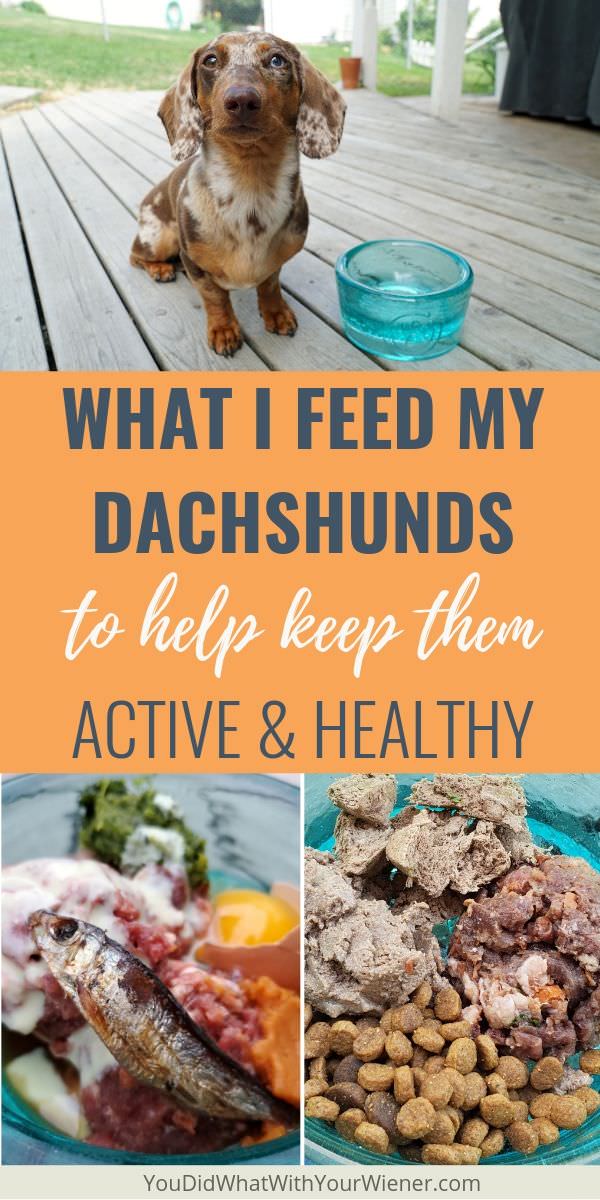
What About the Recent Grain Grain Free – Dilated Cardiomyopathy (DCM) Connection?
Some people who have seen the foods that I feed my Dachshunds have asked me if I’m worried about Dilated Cardiomyopathy (DCM) or warned me about it.
I’m very aware of the potential grain-free dog food connection to DCM. I’ve been following it since the first stirrings last year.
The issue is very complicated though.
It’s true that more and more dogs are becoming affected by the heart condition DCM.
It’s true that the most likely suspect is related to nutrition. Specifically, a taurine deficiency.
It’s logical that the first place to look for a cause is the kind of food the affected dogs have been eating.
So that is what the FDA has been doing.
There is mounting evidence that the dogs developing DCM have been eating boutique, exotic ingredients, or grain-free – “BEG” – diets high in peas/lentils/potatoes.
There is a theory that somehow those ingredients are interfering with the uptake of taurine from food.
Taurine is an amino acid found primarily in meat. It is important for the function of several body organs, including the heart.
Should I Switch My Dog’s Food from Grain Free?
First, I think it’s important to note that dogs who have been eating grain-free, or BEG, diets and have developed DCM have been eating one single food long-term.
As I’ve stated before, I switch my dog’s food regularly.
My reasoning is that – as blogger friend who is more versed in dog nutrition than I am summed it up – feeding your dog the same thing their whole life can be bad for them (no matter how “good” the food is).
My current stance on the issue is, “Don’t panic and consult with your vet if you have concerns about your dog.”
You can read more about my opinion, and see what I think are the most important articles to read on this issue right now, on our Facebook page.
However, a few main points of the most recent FDA report are:
- The current FDA report is just a compilation of dog breed, the dog food they were eating, and a few other details of each case reported to them in the last year or so. It lists facts of the known cases but there are, at their own admission, many, many other factors that could be involved in the heart issues (DCM).
- ALL types of dog food (wet, kibble, raw) showed up in their reports at least once but most of the reports came from dogs eating kibble (this could be because a larger number of dogs eat kibble, not necessarily point to kibble as the culprit).
- The food brands the FDA calls out are merely a list of foods reported most frequently. The proportions are influenced by several things like how popular the food is (means more people feed it), the income level and preference of the people who submitted reports (they choose to feed these “high quality” foods and can afford it… and can also afford diagnostic testing for DCM), etc.
- The FDA is not saying that these foods are PROVEN to be the cause of heart issue in this specific order (and excluding other brands) but they just want you know the facts so you can make an informed decision. In other words, it’s not a statement that the listed foods CAUSED the heart issues, although they may have played a part in influencing it.
The FDA’s FAQ page about the report further clarifies:
- It’s important to note that the reports include dogs that have eaten grain-free and grain containing foods and also include vegetarian or vegan formulations. They also include all forms of diets: kibble, canned, raw and home-cooked. Therefore, we do not think these cases can be explained simply by whether or not they contain grains, or by brand or manufacturer.”
- At this time, we are not advising dietary changes based solely on the information we have gathered so far. If you have questions or concerns about your dog’s health or its diet, we suggest that you consult your veterinarian.
Anyway, I’m not changing how I feed Gretel and Summit right now. I already do not feed them much kibble, most of the foods I feed them are high in protein and low in carbs (legumes, potatoes, grains), and I rotate their food at least monthly.
What to Do If You Are Concerned About Your Own Dog
If, unlike me, you are immediately concerned about your dog’s health or diet, here are a two things you can do:
- Consult with your veterinarian to check the current health of your pet’s heart, check for a taurine deficiency, and discuss your dog’s diet.
- Transition your dog’s food (follow these instructions if you do) to something that is lower in peas/lentils/potatoes. Foods to look into would be ones that are primarily protein (organ, meat, bones) and/or contain low glycemic grains.
You can also do more reading on DCM and taurine deficiency in general.
So there you have it. These are the foods that I have deemed high quality for my fit and healthy Dachshunds (although, like I said, they occasionally eat other dog foods too).
Leave a comment below if you have a question about these foods or our feeding routine in general.

About the Author
Hi, I’m Jessica. I’ve been studying the Dachshund breed since 2007, owned 3 of my own, and shared in the lives of thousands of others through their owner’s stories. When I’m not sharing what I know on this blog, you can find me hiking, camping, and traveling with my adventurous wiener dogs.
Hi Jessica – Just wanted to thank you for writing these two articles – I often wonder if I am making the right choices in the food that I give my two doxies. Further complicating factor is that my girl Izzy has had a painful bout of pancreatitis,since this has further threw me into a tailspin on my food choices. Reading the nutrition labels can be confusing as well when you are looking to get the best balance of calories, protein and fat..Any thoughts on nutrition labels? The whole minimum fat, protein thing doesn’t clarify for me whether this is an appropriate formula or not for her in particular. Thankful that her brother (same litter!) hasn’t had the same health issues.
BTW we have the very same handmade glass bowl in the same color! Love it! ( :
Diane – mom to two 12 yr old doxies in Burien WA
Hi Diane. I wrote this articles with a healthy dog in mind. I’m not very experienced with dogs that have health issues. I know pancreatitis can be a big deal so, if it were me, I would probably go with what the vet recommended, at least at first. You can also ask your vet to be referred to a board certified dog nutritionist and you could discuss specific diets with them. My general thoughts on nutrition labels is that they are “accurate” but can be super confusing. I know for some (or all?) nutrients, in order to compare them from food to food, you have to do some extra calculation. I think at least one of those has to do with the moisture in the food. Sorry I can’t be of more help.
hi my name is LindaSue, i have been wanting to try my furbaby on a better food for her maybe try raw but i don’t know which would be best for her since she is a senior dog of 14 yrs. could you help me with a good easy choice, im also a senior and i get confused if things are to difficult, can you give me one good sugestion please thank you!
Hi LindaSue. If your dog is 14 years old, and is doing well on the food you are feeding her, honestly, I would not switch her to raw at this point. Raw has a lot more protein and that can cause problems for an older dog whose organs may not be functioning in top-top condition. It also contains small amounts of bacteria that most younger dogs can process easily but a dog of that age might not be able to. I first suggest talking to your vet if your dog has any existing health issues. Then, if you want to switch her food to something better, look into canned/wet food. There are a lot of really good ones out there these days, including the ones that I mention above. First Mate makes some really good ones too. Good luck.
Where do you get the blue bowl?
It’s amazing isn’t it? It’s from a company called PawNosh but, unfortunately, they are no longer in business (website is still up but you can’t purchase). You may be able to find a used one on Etsy or something though.
Hi Jessica,
You mention the various canned foods you feed your dogs. We always read about the importance of switching dogs over slowly from one brand to the next, in order to avoid stomach upset. If you’re trying new brands how do you deal with that? Do you stick with one for a few months before trying something different?
Hi Hindy. I actually wrote a blog post about that. You can read it here: https://youdidwhatwithyourweiner.com/why-you-should-rotate-your-dogs-food-and-how-to-do-it-properly/
In short, most dogs that have gone through a “proper” food transition develop the ability to adapt to changes in diet rapidly. That is, of course, if they don’t have stomach issues or specific dietary needs. I would also expect that constantly switching foods could be hard for a senior dog as they can develop some kind of imbalance in their gut or intestines.
Great article.
Have heard about Dr Marty’s freeze dried food?
Our Dachshund, Kammy loves it.
I have and heard good things about it. I think we tried it once a long time ago.
Yes! Dr. Marty’s freeze dried. I like it, and my dogs love it, because it does not have all the added ingredients/chemicals, that are not foods. It also doesn’t have chicken in it. It has all the different proteins in every feeding. From the package: Nature’s Blend contains: Turkey, Beef, Salmon, Duck, Beef Liver, Turkey Liver, Turkey Heart, Flaxseed, Sweet Potato, Egg, Pea Flour, Apple, Blueberry, Carrot, Cranberry, Pumpkin Seed, Spinach, Dried Kelp, Ginger, Salt, Sunflower Seed, Broccoli, Kale, Mixed Tocopherols (natural preservative)
I also rely on the Dog Food Advisor website, https://www.dogfoodadvisor.com/. It’s a great source to help you decide which dog food to feed your dog. They also send out warnings and recalls on dog food to your email.
hi, jessica. you may recall that in the past month or two you helped my wife and me greatly in choosing a winter coat for our 12 pound dachshund, hogan. thank you again. we would now be grateful for your guidance in regularly feeding hogan a diet of human food. we have been doing this for some time. for carbs– potato, rice, couscous, pasta. for protein– eggs, ground beef, ground turkey, chicken, pork. white fish like tilapia and cod. for vegetables– broccoli, green beans, cukes, lettuce, carrot sticks. two meals a day. always the food is cut up into very small bits first. he seems to be thriving and has not gained any weight. please correct us if we are being irresponsible. thank you in advance, and very best regards. phil axten.
Hi Phil. I replied to your email but I’m also leaving that reply here for others to see.
I would discuss this diet with your veterinarian. Including carbs, proteins, and vegetables in general is fine but they must be in a specific ratio to be a balanced diet. Also, all needed nutrients need to be contained in the food(s). As I am not a pet dietician, I cannot analyze this food. I get the desire to home cook meals. There are recipes you can find online from dog nutritionists that can help you make sure your “formulation” is correct. Personally, I stick with prepared diets for dogs (frozen prepared raw) so I KNOW the nutrition is in the proper ratios. I had a friend who fed her dog home cooked meals that did not contain the right nutrients. Her dog accidentally became malnourished and he lost a lot of teeth (rotted). It was scary to me how easy it is to get a dog’s diet out of balance.